With photos by Jennifer Patricia A. Cariño (IG: @jpacarino)
I have often viewed classical opera as inaccessible, as something that only those in high society would appreciate. So when NorthCon was invited to a performance of Puccini’s La Bohème by the Cultural Center of the Philippines and Viva Voce in Baguio last November 25, I grabbed the chance to watch an opera for the first time.
I expected to appreciate the musicality more than anything, since the songs were in a foreign language. Frankly, I was also a bit apprehensive, worried that I might not be able to relate at all.
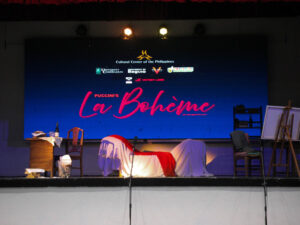
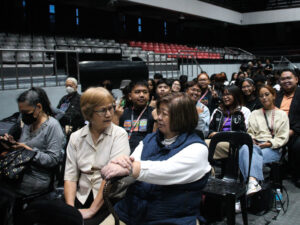
The University of Baguio gym was set up for the performance — one of the usual concert venues in the city. The stage was arranged with a piano on the left-hand side and the props for the first scene in the middle: a small table and some chairs, a chaise sofa, and an easel. We arrived and registered, and found our seats in the third row of the center section. As the seats were filling up, people who were already seated were chatting with acquaintances and friends.
More than eight microphones were placed in different parts of the stage — more than the usual number for a musical concert.
The anticipation could be felt — in the quiet conversations and in the way people around me seemed to share the same restrained excitement. I have always loved listening to music; it’s one of my simple joys. And I wanted to see if opera would be something I would also embrace.
Learning about Opera
After the opening prayer and the National Anthem, the audience was treated to a short talk about the opera and its basic elements, given by Camille Lopez-Molina of Viva Voce Lab. She introduced the different vocal types in opera and explained how each one often comes with its own characterization.
Coloraturas are usually the lightest and highest female voices, often portraying the main heroine. Mezzo-sopranos typically play the secondary female lead, such as a close friend or relative. Then come the male voices: the tenor, who is usually the main male lead; the baritone, often the secondary lead; and finally the bass, who commonly takes on supporting but memorable roles.
Hearing this background helped me understand and appreciate what came next a lot more.
Loving Opera
Then the performance started. As the main characters—the four bohemians—came in one by one, my attention was, at first, torn between the singers and the subtitles being shown on the LED wall at the back of the stage. The first act introduced Rodolfo, a poet, and Marcello, a painter, along with their friends. Their arias reflected their lives as starving yet sometimes carefree artists.
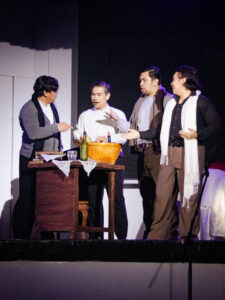
My favorite part of the first act was the first encounter between Rodolfo and Mimi, who would later become lovers. It felt like watching a romantic comedy, except the words were being sung in Italian. I could feel the joy in their well-performed arias. By then, the subtitles were beginning to matter less; I was following the story simply through the emotions in their voices.
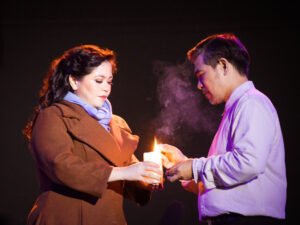
As the other acts unfolded, I felt more and more drawn to the performances and the unfolding story. It was, after all, a love story with a tragic end. But it was the music — the songs themselves — that carried all the emotions the characters were feeling straight to me. If this is what the opera experience is like, I wouldn’t mind doing it again.
What made this performance even more meaningful was knowing it came to Baguio through Progetto Puccini, an opera education and masterclass program of the Cultural Center of the Philippines, now in its second phase. CCP and Viva Voce are working to bring opera closer to communities across the country, nurturing appreciation for this art form beyond traditional venues and audiences. As someone experiencing opera for the first time, I felt how this outreach can open doors for people who once thought opera was out of reach.
Attending La Bohème that evening was memorable. It changed the way I saw opera, turning something once intimidating into something emotional and relatable. I am grateful that programs like Progetto Puccini make it possible for performances of this caliber to reach places like Baguio. And if another opera finds its way here again, I would be more than happy to be in the audience once more.
==================
The beloved opera La Bohème by Giacomo Puccini was staged on November 26, 2025 at 5:30 p.m. in the University of Baguio gym, Baguio City. The performance — free and open to the public — was part of the second phase of Progetto Puccini, the national opera-education and masterclass program by Cultural Center of the Philippines (in cooperation with Viva Voce Lab and local partners. It featured a full cast including lead roles and was designed to bring opera to communities outside major urban centers, making it more accessible to a broad audience.