

From lattes and ice cream to cocktails and pastries, that vibrant purple tint of ube, or purple yam, has become one of the world’s hottest food trends lately. Some people call it “the new matcha”, and yeah it’s definitely showing up in cafés and supermarkets across the United States, United Kingdom, and Australia. But while international demand is really booming, Philippine farmers are sort of struggling to keep up, or stay on the same track.
In 2025, Philippine exports of ube and ube-based products hit over US$3 million, with nearly 1.7 million kilograms shipped abroad, mostly heading to the United States. TikTok and Instagram, those platforms, helped push the root crop into the spotlight. So in a way it’s turned a long-loved Filipino ingredient into a global sensation, people suddenly started ordering ube everything, not just in specialty places.
Still, behind all those colorful desserts, there’s a bigger worry starting to show up.
A boom amid falling production, which feels backwards
Agricultural experts describe the situation as a paradox. Demand overseas keeps rising, but local output has been slipping for a while now.
Retired University of the Philippines Los Baños professor Dr. Teodoro Mendoza said Philippine ube production went down from more than 15,000 metric tons in 2021 to about 12,483 metric tons in 2025. The drop is serious enough that the Philippines has begun importing ube from Vietnam, basically to supplement what’s not being produced locally.
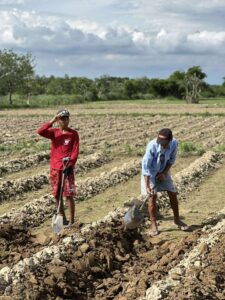
Several things are driving the shortage, and none of them feel small.
For one, ube unlike many other root crops, needs roughly eight to eleven months before harvest, so farmers often find it less appealing if they want faster returns. Then come climate disturbances, pest pressure, plant diseases, and limited planting materials, which together make the whole cycle harder to manage. On top of that, weaker government support and shrinking budgets for ube development have added to fears that the industry might not stay stable for the long run.
Opportunity for Farmers
Despite these challenges , experts say that the purple yam craze is also kinda like a fresh opening for Philippine agriculture.
The Philippines is still home to some of the world’s most diverse ube varieties and it’s also widely recognized as one of the crop’s centers of origin. And since international buyers are leaning more into authentic Filipino flavor and natural food ingredients, local growers could end up with stronger demand and better prices, in a real way.

Right now, companies are moving toward multi-region sourcing systems, so supply can stay steady all year, and so the effects from typhoons or crop failures can be reduced. Partnerships with universities are also coming in handy, because they help sharpen planting materials and improve farming practices in the field.
Meanwhile, the Department of Science and Technology has been looking into propagation technologies too, basically to produce solid quality planting stock and better support farmers, especially while demand keeps rising.
Beyond a Viral Trend
Industry analysts believe ube’s popularity is not just a quick mood swing . Major coffee chains and food manufacturers are still rolling out new ube-based products, and restaurants along with bars abroad are experimenting with ube flavored drinks, plus desserts. Consumer interest stays pretty high, so the market for this purple tuber could keep growing in the years to come.
For many Filipinos though, ube isn’t only the kind of ingredient that looks good on social media.
It’s a crop that feels woven into the country’s culture and culinary heritage, not something temporary or just for hype.
As the world starts leaning into this “purple gold” thing, the real challenge now is making sure that the farmers who grow it do not get left behind, somehow. With stronger backing, better technology, and sustainable cultivation methods, the global ube enthusiasm could end up being more than just a moment. It might usher in a new chapter for Philippine agriculture, turning a humble root crop into a kind of symbol for chances and national pride.